
The Madonna of Civitavecchia weeps tears of blood
|
|
|
 |
 |
 |
 |
 |
|
* Update August 31, 2020 - [Read article] titled 'Our Lady of Civitavecchia 25 Years On'.
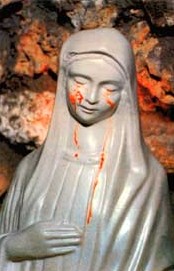
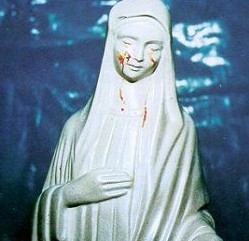
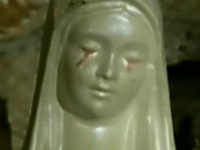
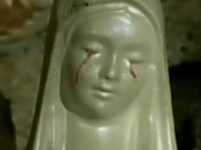
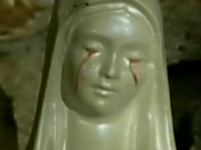
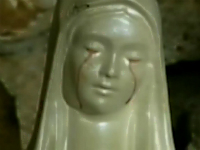
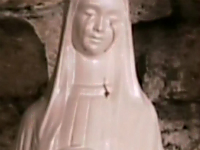
In 1995 A phenomena occurred that could be said to be paranormal; a miracle which left national public opinion literally astounded and which has set off number debates within the Italian and foreign atholic environment and even caught the attention of the Holy Father. In fact, on 2 February of that year, on the occasion of the Feast of the Presentation of Jesus in the Temple and the Purification of May, a small statue of the Madonna portraying the Queen of Peace and coming from Medjugorie, started to cry blood tears in the garden of a family living in the parish of S. Agostino at Civitavecchia. Well, from that day until the 15th of March, the statue of the Madonna cried for 14 times in the presence of many people who have given sworn testimony in front of a Theological Commission, instituted by the Bishop who held the statue in his hands the last time the blood tears fell; here, having overcome any doubts, he paved the way to official recognition. While these events were taking place, there were numerous debates and open confrontations between those who ascertained that it was an authentic miracle, and those animated by skepticism who assumed that the incident was purely the fruit of human and not Divine intervention.The statue was then scientifically examined with positive results. There were no tricks or internal hidden devices and the tears were human blood. Finally, after various difficulties, on 17 June 1995 the Bishop placed that statue in a display case situated in the Parish of S. Agostino and displayed it for worship by the faithful. From that day on, there have been considerable pilgrims, even worldwide, that have come to worship the She who everyone now calls "The Madonna of Civitavecchia".
March 1996 - Healings by the Madonna of Civitavecchia. A Theological Commission Researches the Case According to Bishop Girolamo Grillo of Civitavecchia/Turin, Italy, more than 20 extraordinary events have taken place since a statue of Mary is said to have shed bloody tears last year. Healings of persons afflicted with cancer and drug addiction are among them. Bishop Grillo was interviewed by the daily news, "La Stampa," on the anniversary of the phenomenon. The happenings are attributed to the intercession of the Mother of God. Bishop Grillo reported that among the many votive offerings where the statue stands, there are wedding rings as signs of saved marriages and little shoes as signs of children who were cured. The statue originates from Medjugorje in Herzegowina, Jugoslavia. It is said to have wept bloody tears in the garden of an electrician in Pantano near Civitavecchia. The reports have caused international interest. A theological commission is currently researching the case. The last time the statue is said to have wept was last year in the hands of the bishop.
March 20, 2001 - Court Finds No Deceit With Weeping Statue "Virgin of Civitavecchia" Continues to Draw Visitors As reported in [Zenit.org] - Rome - A judge found no evidence of deceit or trickery involved with a statue of the Blessed Virgin that witnesses, including a bishop, say weeps blood.Fabio Gregori, a worker in Civitavecchia, a city near Rome, had declared publicly that the statue wept blood in February 1995. The statue had been brought to his house by Spanish priest Pablo Martin from Medjugorje. The case received wide media coverage and brought thousands of visitors to the garden of Gregori's home, where the statue was first placed, and later to the nearby church where it was later taken. A consumer-protection group, Codacons, along with another group, Anti-Plagiarism Telephone, denounced Gregori before Judge Carmine Castaldo of Civitavecchia. Gregori, an electrician, was accused of association to commit offense, fraud, and abuse of people's credulity. The judge on Monday ruled that there was no trickery involved in the case. Bishop Girolamo Grillo of Civitavecchia said: "Six years ago, I got angry because I felt the magistrate was interfering unduly in ecclesiastical questions. However, they haven't found anything, and they have had to close the case. It is further confirmation, offered by third parties who are above suspicion, that following the phenomenon of the tears, there was no deceit. Today I say: Let's hope that the world will at least believe the court." Bishop Grillo admitted he was initially skeptical when he first heard Gregori's story. "One week after the announcement of the first weeping, I told the parish priest to get a hammer and destroy the little statue," the bishop said. "He hid it, entrusting it to Mr. Gregori's brother. Then I took custody of it to clarify the case, and the statue wept while I held it in my hands." Bishop Grillo reports that an average of 3,500 pilgrims a week visit the church that houses the statue. Five Masses are celebrated in the church on Saturdays, and seven on Sundays. The accused was also pleased. "I am happy that the case has been closed, but in conscience I must say that I was always absolutely at peace," Fabio Gregori stressed. "I was prepared to face an eventual sentence so long as I could defend the truth to the end." The electrician remembers the many searches to which his home was subjected. However, "I have never felt this judicial matter as a weight," he said. "My life as a husband and father of a family has not changed; my Christian being has changed profoundly." The Congregation for the Doctrine of the Faith is analyzing the case of the weeping statue. At Bishop Grillo's request, the Vatican congregation is allowing faithful to visit the statue.
Address: Via Fontanatetta, s.n.c | Borgo Pantano, 00053 Aurelia, Civitavecchia, Italy Learn more about these events [here] and [here].
|